Lake Sam Rayburn
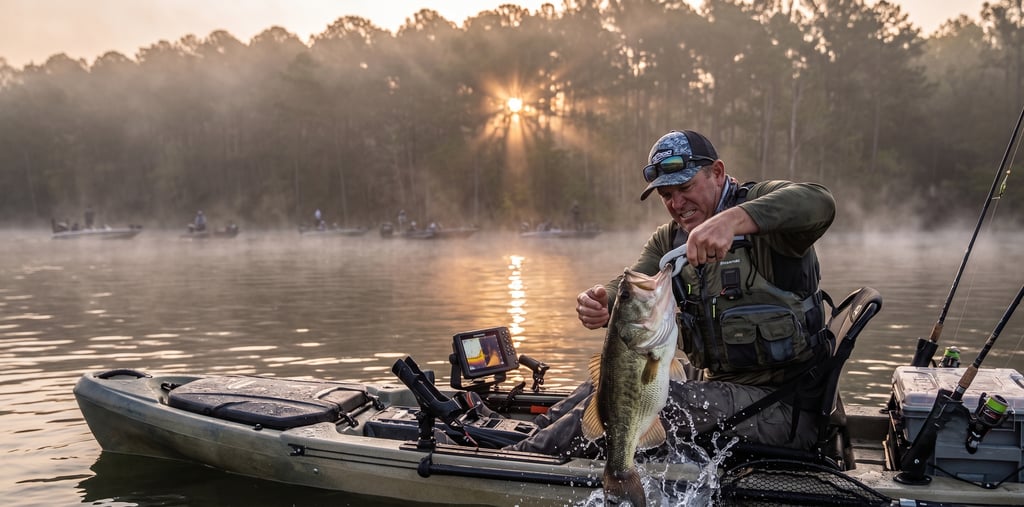
Sam Rayburn Reservoir, affectionately known to anglers as Big Sam, is situated in the Deep East Texas Piney Woods along the Angelina River. Spanning across Jasper, Sabine, San Augustine, and Angelina counties, it sits roughly seventy miles north of Beaumont and is the largest body of water contained entirely within the state of Texas, covering approximately 114,500 surface acres with over 600 miles of shoreline.
Regarding national standing, Sam Rayburn is an undeniable juggernaut in competitive bass fishing. It was named the number-one bass fishing lake in the entire nation by Bassmaster Magazine in 2018 and consistently holds a top position in national rankings due to its sheer size, habitat density, and unmatched output of heavy tournament limits. Tournament anglers routinely produce historic five-fish limits exceeding 30 to 40 pounds on the lake, making it one of the most famous stops on major professional fishing circuits.
The reservoir holds an elite ranking in the Texas Parks and Wildlife Department’s Toyota ShareLunker Program. Sam Rayburn has produced 28 official Legacy Class ShareLunkers weighing over 13 pounds. Its official all-time lake record largemouth bass is a massive 16.80-pound trophy caught by Tommy Shelton in May 1997. Across the lower Lunker, Elite, and Legend tiers for fish weighing 8 pounds or more, Sam Rayburn routinely logs dozens of entries each year, placing it among the highest overall lunker-producing lakes in state history.
Originally named McGee Bend Dam and Reservoir when construction began in 1956, Congress officially renamed the lake in 1963 in honor of U.S. House Speaker Sam Rayburn. Managed by the U.S. Army Corps of Engineers, the lake is surrounded by the Angelina National Forest and features extensive aquatic vegetation like hydrilla, submerged timber, and deep river channels. Beyond its world-renowned largemouth bass fishery, Sam Rayburn supports premier populations of white crappie, black crappie, blue catfish, and channel catfish, solidifying its place as an iconic Texas outdoor landmark.